
Integrating Sustainability into Business Strategy
For many years, sustainability was often viewed as a compliance requirement, a corporate social responsibility initiative, or an environmental commitment separate from core business operations.
Today, that perspective is rapidly changing. Across industries, sustainability is increasingly recognized not as a cost center, but as a strategic growth driver. Organizations that successfully integrate sustainability into their business models are demonstrating stronger resilience, improved stakeholder trust, enhanced operational efficiency, and greater long-term competitiveness.
According to the World Economic Forum, sustainability has become one of the defining factors influencing future business performance, investment decisions, and organizational resilience in an increasingly uncertain world (World Economic Forum, 2024).
The question is no longer whether companies should pursue sustainability. The question is how sustainability can be embedded into business strategy to create measurable economic, social, and environmental value.
The first generation of sustainability focused primarily on reporting. Organizations measured carbon emissions, published sustainability reports, and disclosed environmental performance indicators.
While transparency remains important, leading organizations are moving beyond reporting toward value creation.
Sustainability is becoming an operational strategy that influences:
- Infrastructure investment
- Supply chain design
- Asset management
- Resource efficiency
- Circular economy initiatives
- Long-term ecosystem resilience
According to McKinsey & Company, companies that integrate sustainability into core business strategy often outperform peers through improved operational efficiency, stronger risk management, and enhanced access to capital (McKinsey, 2024).
In other words, sustainability increasingly creates business value while simultaneously generating positive societal impact.
Modern economies depend on critical infrastructure. Digital connectivity, energy systems, logistics networks, maritime transportation, and communication assets collectively enable economic growth and social development.
However, infrastructure assets are becoming increasingly vulnerable to aging, climate risks, operational disruptions, and growing demand pressures. Maintaining the reliability of these assets is therefore not simply an operational necessity.
It is a sustainability imperative.
Organizations that invest in proactive maintenance, lifecycle management, and resilience planning can significantly extend asset life, reduce environmental impacts, and improve service continuity.
The International Energy Agency (IEA) estimates that extending infrastructure asset lifecycles can substantially reduce resource consumption and carbon intensity compared to replacement-driven models (IEA, 2024).
True sustainability requires an ecosystem perspective. Infrastructure assets do not operate in isolation. They exist within interconnected networks involving communities, industries, regulators, technology providers, and natural environments.
A sustainability ecosystem approach focuses on five interconnected pillars:
1. Maintenance
Preventive and predictive maintenance ensure critical infrastructure remains reliable, efficient, and operational throughout its lifecycle. Well-maintained assets reduce operational risks, minimize resource waste, and support long-term service availability.
2. Repairing
Repair and restoration activities extend the useful life of infrastructure while reducing unnecessary replacement costs and environmental impacts. Repair-first strategies are increasingly recognized as important contributors to sustainable asset management.
3. Connectivity
Reliable connectivity supports economic activity, digital inclusion, business operations, education, healthcare, and public services. As economies become increasingly digital, connectivity infrastructure becomes a critical enabler of sustainable development.
The World Bank identifies digital connectivity as one of the primary foundations for inclusive economic growth in developing economies (World Bank, 2024).
4. Scrapping and Circular Asset Recovery
Sustainability is not only about maintaining assets. It is also about responsibly managing end-of-life infrastructure. Through responsible scrapping, material recovery, recycling, and circular economy practices, organizations can reduce waste, recover valuable resources, and minimize environmental impact.
According to the Ellen MacArthur Foundation, circular economy initiatives have the potential to unlock trillions of dollars in economic value while significantly reducing environmental pressures (Ellen MacArthur Foundation, 2024).
5. Ocean and Future Stewardship
Marine ecosystems support global trade, communications infrastructure, fisheries, and biodiversity. Protecting ocean environments while supporting economic development requires careful balancing of operational activities and environmental stewardship. Organizations increasingly recognize that long-term business success depends on healthy ecosystems and sustainable resource management.
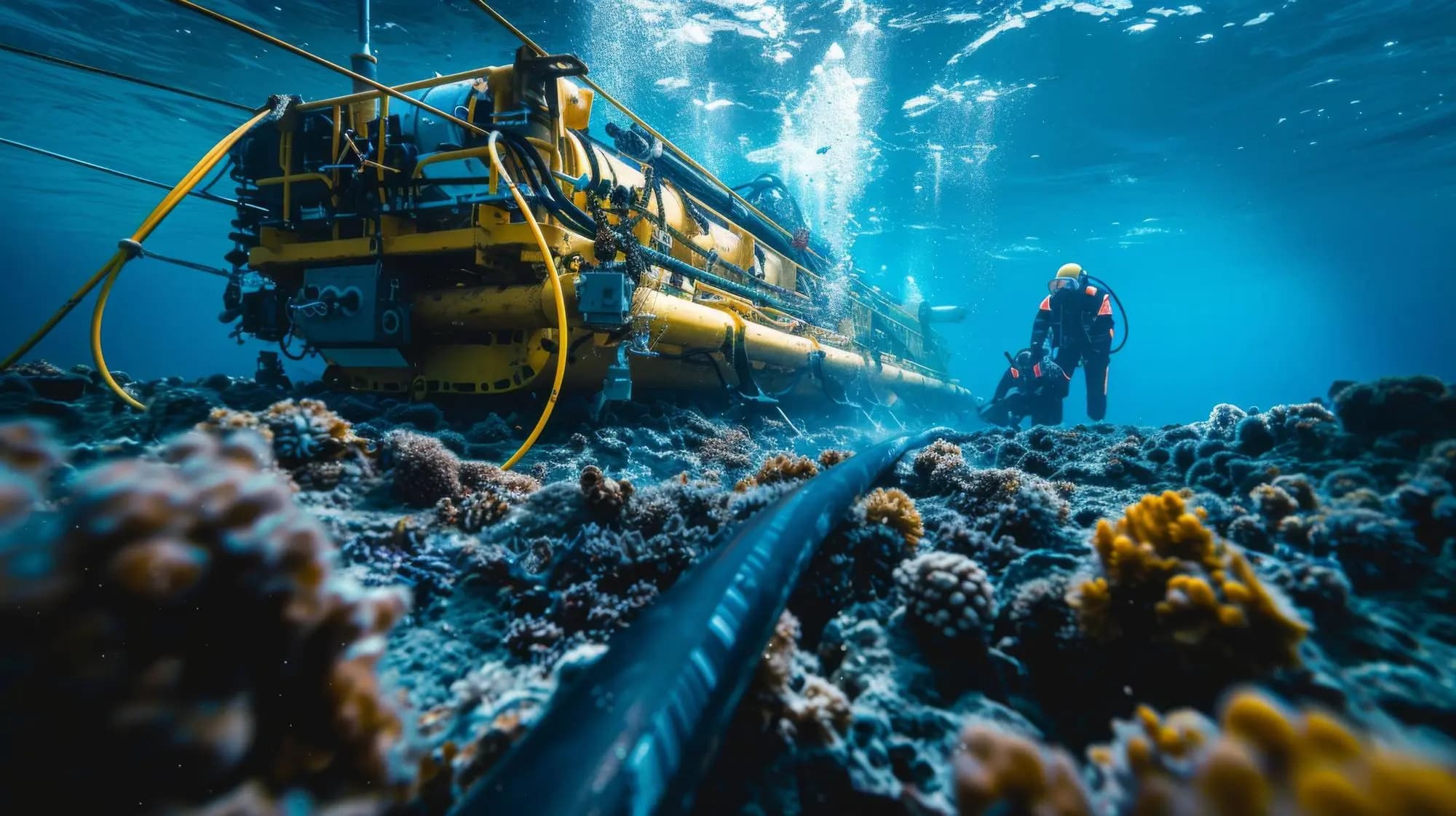
One of the most important yet often overlooked sustainability challenges lies beneath the ocean. Submarine cable networks carry more than 95% of international internet traffic and form the backbone of the global digital economy (International Telecommunication Union, 2024).
These critical assets require continuous monitoring, maintenance, repair, and eventual decommissioning. As digital demand continues to grow, ensuring the resilience and sustainability of subsea infrastructure becomes increasingly important.
Sustainable management of connectivity assets includes:
- Infrastructure reliability
- Environmental risk mitigation
- Asset lifecycle optimization
- Circular recovery practices
- Long-term ecosystem preservation
Organizations operating within this sector have a unique opportunity to contribute simultaneously to economic development, technological advancement, and environmental stewardship.
Leading organizations increasingly view sustainability as a source of competitive advantage rather than a regulatory burden.
Benefits include:
Risk Reduction
Organizations become more resilient to operational disruptions, climate risks, and regulatory changes.
Operational Efficiency
Resource optimization and lifecycle management reduce costs and improve performance.
Investor Confidence
Environmental, Social, and Governance (ESG) performance is becoming increasingly important in investment decision-making.
Brand Trust
Customers, partners, and stakeholders increasingly prefer organizations that demonstrate genuine sustainability commitments.
Long-Term Growth
Sustainable business models are often better positioned to adapt to future market expectations and regulatory environments.
Deloitte's Sustainability and Climate Survey found that organizations integrating sustainability into strategic planning are significantly more likely to achieve long-term growth objectives compared to those treating sustainability as a standalone initiative (Deloitte, 2024).
At Arunika Ekosistem Nusantara, sustainability is viewed as the intersection of infrastructure resilience, connectivity, circular asset management, and ecosystem stewardship.
We believe sustainable growth is achieved not only through innovation, but through maintaining the critical systems that enable societies and economies to function.
By supporting infrastructure maintenance, repair, connectivity resilience, circular recovery initiatives, and long-term ecosystem sustainability, organizations can create enduring value for businesses, communities, and future generations.
Sustainability is not merely about preserving what exists today. It is about building resilient ecosystems that enable future growth.
The future of sustainability lies beyond compliance. It lies in creating business models that integrate economic performance, environmental responsibility, and social value creation.
Organizations that embrace sustainability as a strategic capability will be better positioned to navigate uncertainty, strengthen resilience, and unlock new growth opportunities.
As global challenges continue to evolve, the most successful organizations will not be those that choose between growth and sustainability. They will be those that successfully achieve both.
- World Economic Forum. (2024). The Future of Sustainable Business and Growth. Available at: https://www.weforum.org
- McKinsey & Company. (2024). The Sustainability Imperative: Creating Value Through Sustainable Growth. Available at: https://www.mckinsey.com
- Deloitte. (2024). Sustainability and Climate Survey: Integrating Sustainability into Business Strategy. Available at: https://www.deloitte.com
- International Energy Agency (IEA). (2024). Infrastructure Resilience and Sustainable Asset Management. Available at: https://www.iea.org
- World Bank. (2024). Digital Connectivity and Inclusive Economic Development. Available at: https://www.worldbank.org
- Ellen MacArthur Foundation. (2024). Circular Economy and Asset Recovery Framework. Available at: https://ellenmacarthurfoundation.org
- International Telecommunication Union (ITU). (2024). Submarine Cable Infrastructure and Global Connectivity Report. Available at: https://www.itu.int
- United Nations Global Compact. (2024). Business Leadership for Sustainable Development. Available at: https://unglobalcompact.org
- OECD. (2024). Sustainable Infrastructure for Long-Term Growth. Available at: https://www.oecd.org
- PwC. (2024). ESG and Sustainable Business Transformation. Available at: https://www.pwc.com