How AI is Transforming Supply Chains to Be More Adaptive and Resilient
For decades, supply chain management was primarily focused on one objective: efficiency. Organizations optimized procurement, inventory, warehousing, transportation, and production planning to reduce costs and improve operational performance. In a relatively stable world, efficiency was often considered the ultimate measure of supply chain excellence.
However, the global business landscape has fundamentally changed. Geopolitical tensions, climate-related disruptions, commodity price volatility, cyber threats, trade restrictions, and logistics bottlenecks have become recurring realities rather than isolated events. The disruption of the Suez Canal, Red Sea shipping routes, global semiconductor shortages, and extreme weather events have demonstrated how interconnected and vulnerable modern supply chains can be (World Bank, 2024; World Economic Forum, 2024).
In this environment, organizations are discovering that efficiency alone is no longer enough. The future belongs to supply chains that are adaptive, intelligent, and resilient. Artificial Intelligence (AI) is emerging as one of the most powerful enablers of this transformation.
Traditional supply chains are largely reactive. Organizations analyze historical reports, investigate operational issues after they occur, and implement corrective actions to prevent future recurrence. While this approach remains important, it often leaves organizations responding to disruptions rather than anticipating them.
Artificial Intelligence fundamentally changes this paradigm. Through machine learning, predictive analytics, and real-time data processing, AI enables organizations to identify patterns, detect anomalies, forecast risks, and recommend actions before disruptions significantly impact business operations.
Instead of asking: What happened?
Organizations can increasingly ask:What is likely to happen next?
This shift from hindsight to foresight represents one of the most significant transformations in modern supply chain management. According to McKinsey & Company, organizations implementing AI-driven supply chain capabilities can improve forecasting accuracy by up to 50%, reduce inventory levels by 20–30%, and lower supply chain operating costs by 15% or more (McKinsey, 2024).
The concept of resilience has become a strategic priority for business leaders worldwide. Historically, supply chains were optimized for cost efficiency, often relying on lean inventories, single sourcing strategies, and globally dispersed production networks. While these approaches improved margins, they also increased vulnerability to disruption.
The COVID-19 pandemic exposed many of these weaknesses. However, recent disruptions demonstrate that the challenge extends far beyond pandemics.
- Climate events affect agricultural production.
- Geopolitical conflicts influence trade routes and energy markets.
- Commodity price fluctuations impact procurement strategies.
- Cybersecurity threats introduce new operational risks.
As a result, organizations are increasingly investing in supply chain resilience, defined as the ability to anticipate, absorb, adapt to, and recover from disruptions while maintaining business continuity.
According to Deloitte's Global Supply Chain Survey, resilience has surpassed cost reduction as a top strategic priority among supply chain executives globally (Deloitte, 2024).
Artificial Intelligence is not a single technology solution. It creates value across every stage of the supply chain.
Procurement Intelligence
AI-powered supplier analytics can evaluate supplier performance, monitor risks, predict disruptions, and support strategic sourcing decisions. Organizations can identify vulnerable suppliers before disruptions occur and proactively diversify sourcing strategies.
Intelligent Production Planning
Machine learning algorithms can optimize production schedules by considering demand forecasts, resource availability, maintenance schedules, and operational constraints simultaneously. This enables greater flexibility while reducing waste and improving asset utilization.
Inventory Optimization
AI can continuously analyze demand patterns and supply risks to determine optimal inventory levels. Rather than relying on static safety stock calculations, organizations can dynamically adjust inventory policies based on real-time conditions.
Logistics and Distribution
Route optimization, transportation planning, and real-time visibility platforms allow organizations to improve service levels while reducing transportation costs. AI also supports proactive disruption management by identifying alternative routes and logistics scenarios before delays escalate.
Demand Sensing and Forecasting
One of AI's most transformative applications is demand forecasting. By integrating point-of-sale data, economic indicators, weather information, social signals, and market trends, AI enables more accurate demand sensing than traditional forecasting methods. As a result, organizations can respond faster to changing customer behavior and market dynamics.
One of the most significant developments in supply chain transformation is the emergence of the Supply Chain Control Tower. A modern Control Tower serves as a centralized intelligence platform that provides end-to-end visibility across procurement, production, inventory, logistics, and customer demand.
When combined with Artificial Intelligence, Control Towers evolve beyond monitoring tools. They become predictive decision-support systems.
AI-powered Control Towers can:
- Monitor supply chain performance in real time.
- Predict disruptions before they occur.
- Simulate alternative business scenarios.
- Recommend mitigation actions.
- Support coordinated responses across multiple business units.
This capability enables organizations to move from fragmented decision-making toward integrated ecosystem management. In many ways, the Supply Chain Control Tower represents the operational nerve center of the future enterprise.
Many of the world's most successful organizations have already demonstrated the strategic value of AI-powered supply chains.
- Amazon leverages predictive fulfillment and advanced forecasting to position inventory closer to anticipated customer demand, reducing delivery times and improving service performance.
- Walmart utilizes AI-driven replenishment systems and inventory optimization capabilities to improve product availability while reducing waste and operational inefficiencies.
- Nestlé continues to strengthen its Integrated Business Planning (IBP) framework by leveraging advanced analytics, data integration, and forecasting capabilities to improve decision quality across its global operations.
- Maersk has invested heavily in end-to-end visibility platforms that enable organizations to monitor and manage increasingly complex global logistics networks.
While these organizations operate in different industries, they share three common priorities:
- Data Visibility
- Advanced Analytics
- Ecosystem Collaboration
These capabilities increasingly define the competitive advantage of modern supply chains.
Despite the rapid advancement of Artificial Intelligence, technology itself is rarely the primary obstacle to transformation. Many organizations possess access to advanced technologies but struggle to realize meaningful business value.
The greatest barriers often include:
- Organizational silos.
- Resistance to change.
- Bureaucratic decision-making.
- Lack of data governance.
- Limited collaboration across functions.
Technology can enable innovation. Leadership creates the conditions for innovation to succeed. Organizations that successfully transform their supply chains typically combine technological investment with cultural transformation, cross-functional collaboration, and strong executive sponsorship.
The future of supply chain management extends beyond individual companies. Increasingly, competitive advantage will be determined by the strength of interconnected ecosystems rather than isolated organizations.
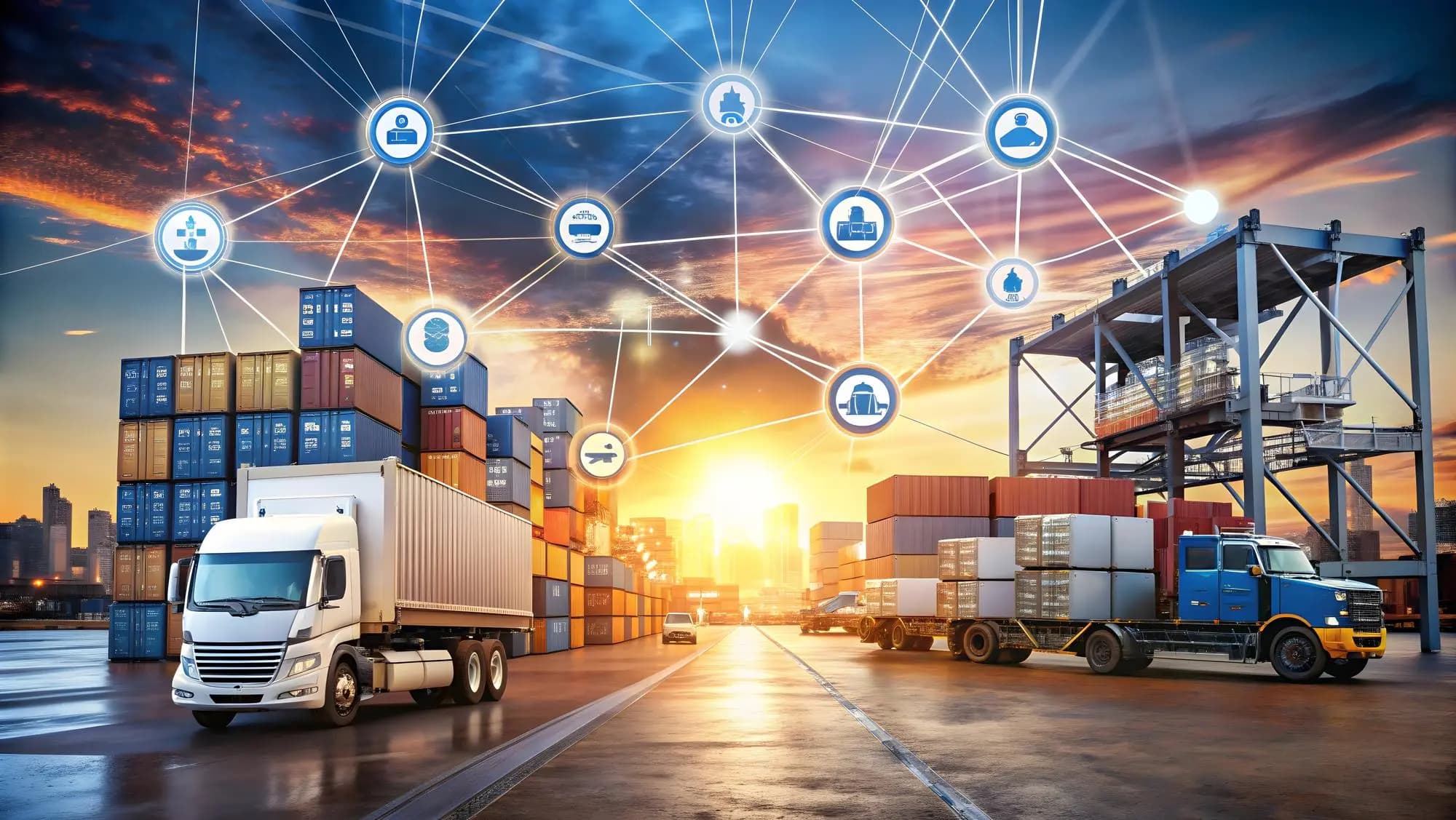
Supply chains are evolving into intelligent networks where suppliers, manufacturers, distributors, customers, and regulators collaborate through shared data and integrated platforms.
The evolution can be summarized as:
Organizations that successfully navigate this journey will be better positioned to manage uncertainty, capture opportunities, and create sustainable value.
Artificial Intelligence is reshaping supply chain management from an operational discipline into a strategic capability. The future supply chain will not be defined by who has the largest inventory, the most warehouses, or the lowest transportation costs. It will be defined by who can anticipate change, respond faster, and make better decisions.
As disruptions become increasingly common, resilience is no longer a competitive advantage. It is a business necessity.
Organizations that embrace AI, data-driven decision-making, and ecosystem collaboration will be best positioned to thrive in the next era of global business. The future belongs to intelligent supply networks powered by data, AI, collaboration, and resilience.
- McKinsey & Company. (2024). The AI-Powered Supply Chain: Unlocking Value Through Advanced Analytics and Automation. Available at: https://www.mckinsey.com
- Deloitte. (2024). Global Supply Chain Survey: Building Resilient and Adaptive Supply Chains. Available at: https://www.deloitte.com
- World Economic Forum. (2024). Future of Supply Chains Report. Available at: https://www.weforum.org
- World Bank. (2024). Global Supply Chain and Trade Resilience Insights. Available at: https://www.worldbank.org
- Gartner. (2024). Supply Chain Technology Trends and AI Adoption. Available at: https://www.gartner.com
- IBM Institute for Business Value. (2024). AI and the Future of Supply Chain Operations. Available at: https://www.ibm.com/thought-leadership
- Harvard Business Review. (2024). How Artificial Intelligence Is Reshaping Supply Chain Management. Available at: https://hbr.org
- Accenture. (2024). Building Intelligent Supply Networks Through AI and Digital Transformation. Available at: https://www.accenture.com
- MIT Sloan Management Review. (2024). The Role of AI in Supply Chain Resilience and Business Continuity. Available at: https://sloanreview.mit.edu
- Kearney. (2024). From Supply Chains to Supply Networks: The Next Competitive Frontier. Available at: https://www.kearney.com